
Solar energy has moved from a promising technology to a central engineering priority. In electrical engineering solar energy, sunlight becomes direct-current electricity through photovoltaic cells, then power electronics convert it for practical use. Engineers must manage voltage variation, heat, shading, grid frequency, protection, and battery storage. A rooftop array may look quiet, yet every cloudy minute changes its electrical output.
The International Renewable Energy Agency reported 473 gigawatts of new solar photovoltaic capacity worldwide in 2023. Solar reached approximately 1,419 gigawatts of cumulative global capacity. The International Energy Agency’s Renewables 2023 report also identified solar PV as the largest contributor to renewable capacity growth. Fatih Birol, the IEA’s Executive Director, called solar PV “the new king of electricity markets.” That statement reflects market momentum, not engineering simplicity.
Real projects expose the harder questions. Can an inverter respond quickly during a fault? Will a battery reduce evening peaks without creating new safety risks? Can a distribution network accept thousands of small generators? The answers depend on measured performance, certified equipment, and careful system design. Reported capacity is useful, but it does not guarantee reliable electricity at every hour. This gap deserves attention. The following discussion examines how solar modules, inverters, storage, protection systems, and grid controls work together. It also considers efficiency losses, maintenance realities, and the trade-offs that glossy forecasts often understate. Solar is powerful. It is not effortless.
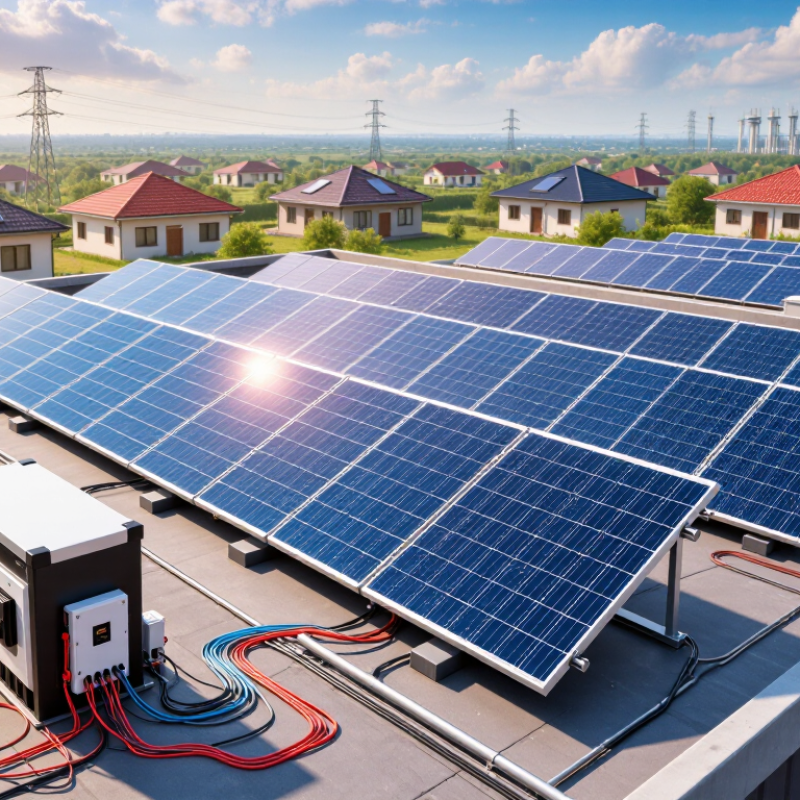
Solar energy is radiant energy from the sun converted into usable electricity. In electrical engineering, photovoltaic cells create direct current when sunlight excites semiconductor materials. An inverter then converts this current into alternating current for household circuits, industrial equipment, or the electrical grid. The process sounds simple. The design is not.
Electrical engineers size conductors, select protection devices, and calculate voltage losses across the system. They also study shading, roof direction, temperature, and daily load patterns. A small shadow across one module can reduce the output of a larger array. That detail is easy to miss. Maximum power point tracking helps the system operate near its best electrical output. Batteries may store surplus energy, but they add weight, cost, heat, and maintenance demands.
Solar energy also supports grid resilience. Distributed systems can reduce daytime demand and supply power during selected outages when paired with suitable controls. Engineers must manage changing sunlight, fault currents, grounding, and safe isolation procedures. A clear design cannot rely on ideal weather data alone. A rooftop assessment may reveal dust, nearby trees, or a weak mounting surface. These practical findings often change the electrical plan. Some early estimates will be wrong. Reviewing measured performance after installation remains essential for improving future designs.
| Dimension | Technical Definition or Data | Role in Electrical Engineering | Practical Significance |
|---|---|---|---|
| Definition | Solar energy is radiant energy from the Sun that can be converted into electricity using photovoltaic cells or concentrated solar power systems. | Provides a renewable source of electrical power for generation, distribution, storage, and grid-support applications. | It is available at the point of use and can reduce dependence on fossil-fuel-based electricity generation. |
| Photovoltaic Conversion | Photovoltaic cells use semiconductor materials to convert light directly into direct-current electricity through the photovoltaic effect. | Requires electrical design of cell strings, modules, array wiring, maximum-power-point tracking, protection, and power conversion. | The output varies with solar irradiance, cell temperature, shading, orientation, and system losses. |
| Solar Irradiance | Solar irradiance is the solar power received per unit area, measured in watts per square metre (W/m²). A commonly used test condition is 1,000 W/m². | Used to estimate array output, select equipment ratings, and evaluate the performance of photovoltaic systems. | Actual irradiance changes throughout the day and year, so energy production is not constant. |
| Rated Power | The rated power of a photovoltaic module or array is commonly expressed in watts-peak (Wp) or kilowatts-peak (kWp) under defined test conditions. | Supports sizing of conductors, inverters, circuit protection, transformers, and grid interconnection equipment. | Peak rating is not the same as the actual power delivered at every moment. |
| Typical Module Efficiency | Commercial crystalline-silicon photovoltaic modules commonly achieve approximately 18%–23% efficiency, depending on design and operating conditions. | Efficiency affects the required installation area, current levels, thermal behavior, and balance-of-system design. | Higher efficiency can produce more power from a limited roof or land area. |
| Inverter Function | An inverter converts variable direct-current electricity from the solar array into alternating-current electricity suitable for loads or the electrical grid. | Performs DC-to-AC conversion, maximum-power-point tracking, synchronization, monitoring, and protective disconnection. | It is essential for integrating photovoltaic generation with conventional AC electrical systems. |
| Energy Storage | Batteries store surplus electrical energy and release it when solar production is low or demand is high. | Supports load shifting, backup power, frequency response, peak reduction, and improved renewable-energy dispatchability. | Storage can reduce the mismatch between daytime solar generation and evening electricity demand. |
| Grid Integration | Grid-connected solar systems exchange electricity with the utility network and must comply with voltage, frequency, power-quality, and anti-islanding requirements. | Engineers coordinate protection, voltage regulation, fault behavior, control systems, and interconnection studies. | High solar penetration may require forecasting, flexible generation, storage, or network upgrades. |
| Temperature Effect | For crystalline-silicon photovoltaic modules, power commonly decreases by roughly 0.3%–0.5% for each 1°C increase in cell temperature above the reference condition. | Influences thermal modeling, voltage limits, module spacing, ventilation, and equipment selection. | A hot module may deliver less power even when sunlight is strong. |
| Key Applications | Applications include rooftop generation, utility-scale power plants, microgrids, remote electrification, telecommunications, water pumping, and solar-powered transportation systems. | Electrical engineers design generation systems for different voltage levels, operating profiles, reliability requirements, and environmental conditions. | Solar technology can be deployed from small standalone systems to large grid-connected installations. |
| Basic Power Estimate | Estimated DC power ≈ Solar irradiance × Module area × Module efficiency | Provides an initial method for estimating array output before accounting for temperature, wiring, inverter, mismatch, and shading losses. | For example, 1,000 W/m² × 10 m² × 20% gives approximately 2,000 W of ideal DC output. |
| Environmental Role | Solar electricity generates power without direct combustion during operation and generally has low operational greenhouse-gas emissions compared with fossil-fuel generation. | Encourages low-carbon system planning, lifecycle assessment, resource optimization, and sustainable electrical infrastructure. | Environmental performance still depends on manufacturing, transportation, installation, maintenance, recycling, and end-of-life management. |
Note: Values are representative engineering ranges or reference conditions. Actual performance depends on local climate, system design, component specifications, installation quality, and operating conditions.
What Is Solar Energy in Electrical Engineering?
Solar radiation becomes electrical power through the photovoltaic effect. Photons strike a semiconductor cell and transfer energy to electrons. An internal electric field separates these charges, creating direct current. Conductive fingers collect the current from each cell. Modules connect in series and parallel to raise voltage and output.
The generated DC power usually passes through a maximum power point tracker. This controller continually adjusts operating voltage as sunlight, temperature, and shading change. An inverter then converts DC into grid-compatible alternating current. Modern systems also monitor frequency, voltage, grounding, and fault conditions. According to IRENA’s Renewable Capacity Statistics 2024, solar capacity reached about 1,419 gigawatts globally by the end of 2023, after approximately 346 gigawatts of additions that year.
The simplified textbook picture misses real conditions. Dust can cover a cell like a thin gray veil. Heat can reduce voltage, while one shaded module may limit an entire string. The IEA Photovoltaic Power Systems Programme reports that module performance and system design remain central to improving energy yield. Field engineers therefore use irradiance sensors, thermal inspections, and curve tracing to find losses. Not every measured result matches the design model. That gap deserves attention. Reliable electrical engineering means checking assumptions against weather data, wiring resistance, inverter behavior, and long-term degradation.
A solar electric power system begins with photovoltaic modules. These modules convert sunlight into direct-current electricity. Their output changes with weather, shade, temperature, and panel angle. Mounting structures hold the modules securely and provide ventilation beneath them. Small details matter. Poor alignment can reduce energy production throughout the year.
Cables carry DC power to a combiner box, where several strings may connect. Fuses and surge protection help limit damage during faults or lightning events. A DC disconnect allows safer maintenance. The inverter then converts DC electricity into alternating current for household circuits. Its maximum power point tracker continually adjusts operating voltage. This helps the modules produce useful power under changing conditions. An AC distribution panel sends electricity to selected loads. A meter records energy flow between the system, building, and utility grid.
Some systems include batteries, a charge controller, and a separate battery disconnect. Batteries can provide backup power, but they require ventilation, temperature control, and careful sizing. Grounding and bonding connect exposed metal parts to a safe fault path. Monitoring equipment displays voltage, current, energy yield, and alarms. However, a neat screen cannot prove that every connection is sound. During inspections, loose terminals, undersized conductors, and hidden shading deserve attention. Design calculations should follow local electrical rules and the actual roof structure. A theoretical layout may look efficient, yet real dust and seasonal shadows can change its performance.
What Is Solar Energy in Electrical Engineering?
Solar energy technologies convert sunlight into controlled electrical power. Photovoltaic cells create direct current when light reaches semiconductor layers. Engineers connect cells into modules, then arrange modules into strings. A combiner box collects these circuits safely. Small rooftop systems may use several strings, each producing different voltage levels. Dust, shade, and heat can reduce output. A practical design must account for all three.
Inverters convert direct current into alternating current for homes, factories, or utility networks. Modern inverters use maximum power point tracking to adjust operating conditions during changing sunlight. Grid-tied systems also monitor voltage, frequency, and anti-islanding protection. Battery storage adds another layer. A battery management system controls charging, temperature, and discharge limits. In field inspections, loose terminals often matter more than impressive efficiency figures. Small faults become expensive when ignored.
Electrical engineers also build solar microgrids for remote facilities and emergency power systems. Controllers balance solar production, batteries, and changing electrical demand. Digital meters provide data for maintenance and performance checks. Thermal sensors can reveal overheated connections before visible damage appears. However, predictions are never perfect. Cloud movement can upset a carefully calculated schedule. Engineers should test designs under weak sunlight, high temperatures, and sudden load changes. Local electrical codes and certified protection equipment remain essential. Sometimes, a simpler system proves more reliable.
What Is Solar Energy in Electrical Engineering?
Applications, Benefits, and Technical Challenges of Solar Power
In electrical engineering, solar energy converts sunlight into direct-current electricity through photovoltaic cells. An inverter then supplies alternating current to buildings or the utility grid. Solar farms, rooftop systems, and solar-powered pumps now serve different electrical loads. The International Renewable Energy Agency reported about 1,419 GW of global solar capacity by the end of 2023. Solar provided roughly 73% of new renewable capacity added that year.
The benefits are measurable. Solar generation produces no combustion emissions during operation and can reduce fuel dependence. The IPCC estimates utility-scale solar lifecycle emissions at a median of about 48 grams of CO2-equivalent per kilowatt-hour. However, panel manufacturing, transport, and disposal still require energy and materials. That detail matters. A clean operating profile is not a zero-impact profile.
Technical challenges become clearer at the grid connection point. Output changes with clouds, seasons, and daylight hours. Engineers must manage voltage rise, frequency response, protection settings, and reverse power flow. Battery storage can shift afternoon production into evening demand, but it adds cost, thermal risks, and replacement planning. The International Energy Agency also identifies grid expansion and flexibility as major requirements for integrating variable renewables. In practical designs, poor shading analysis can reduce output sharply, while excessive storage can waste capital. Some assumptions remain fragile. Better forecasting, recycling systems, and careful site measurements are still needed.
Solar photovoltaic systems convert sunlight directly into electricity through semiconductor cells. The chart compares median life-cycle greenhouse gas emissions from major electricity-generation technologies, measured in grams of CO₂-equivalent per kilowatt-hour. Solar power has substantially lower emissions than fossil-fuel generation.
In electrical engineering, key challenges include variable generation, energy storage, grid integration, inverter control, transmission requirements, and the recycling of photovoltaic modules.