
Global buyers are looking beyond low prices when evaluating China’s renewable energy suppliers. They need stable quality, credible documentation, and dependable long-term support. China offers a broad manufacturing base for solar panels, inverters, batteries, wind equipment, and related systems. However, supplier selection requires more than reading product catalogs. This guide explores China’s leading suppliers through practical buyer concerns, including production capacity, export experience, technical support, and after-sales service. It also considers the growing global demand for “re energy” solutions.
Reliable evaluation starts with evidence. Buyers should review factory certifications, product test reports, warranty terms, and shipment records. Factory audits can reveal details that websites often hide, such as production cleanliness, testing equipment, and inventory controls. Experienced suppliers usually explain their specifications clearly and provide traceable documentation. They also understand grid requirements, installation conditions, and regional compliance expectations. Still, certifications may not reflect every real-world performance issue.
No supplier is perfect. A strong company may still face delays during peak seasons or communication problems across time zones. Some product comparisons remain difficult because suppliers use different testing methods. This article therefore avoids simple rankings based only on size or price. Instead, it highlights practical strengths, possible weaknesses, and questions global buyers should ask before signing agreements. Clear contracts, sample testing, payment safeguards, and independent inspections can reduce avoidable risks. Careful research matters. The best choice is not always the largest supplier, but the one that consistently matches technical needs, project scale, and responsible business expectations.
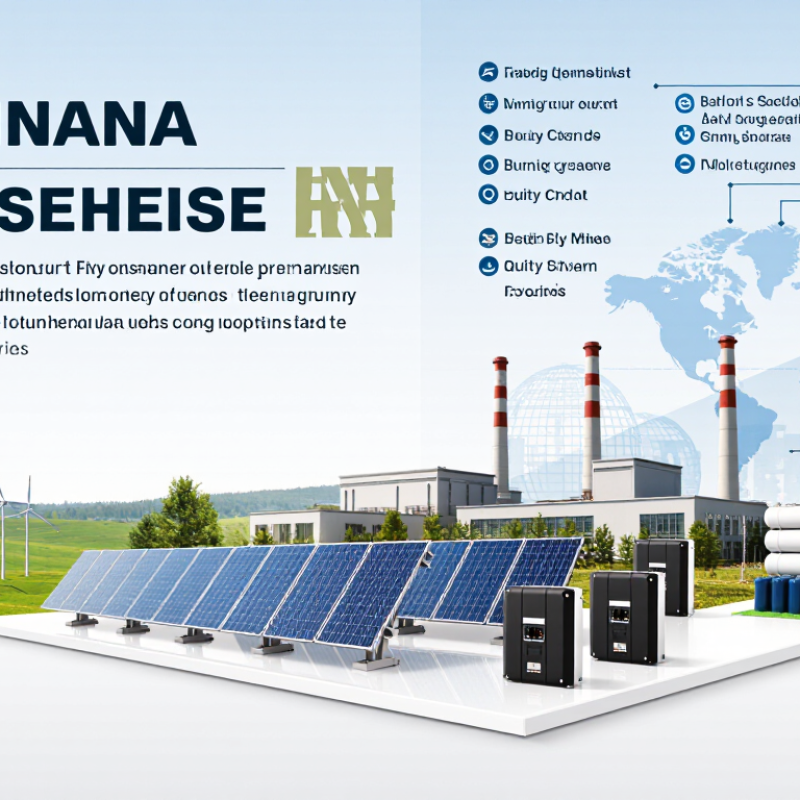
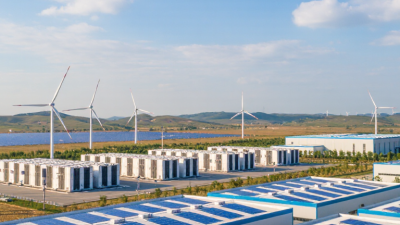
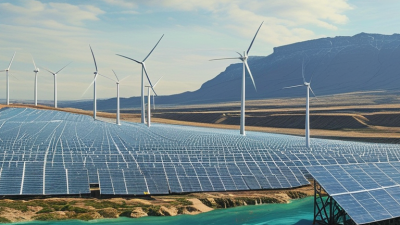
China’s renewable energy industry now reaches far beyond domestic electricity demand. It spans photovoltaic modules, wind turbines, inverters, storage systems, grid equipment, and project services. Manufacturing clusters connect material suppliers, engineering teams, testing laboratories, and export ports. In coastal factories, automated lines inspect cells under bright white lighting. Inland provinces host large wind and solar projects across dry plains. This geographic range gives the sector scale, but scale does not automatically guarantee reliability.
For global buyers, China’s importance lies in both supply capacity and technical learning. Chinese manufacturers have reduced production costs through process improvement and high-volume deployment. They also support different climates, from humid islands to cold, high-altitude sites. A serious procurement review should examine certification, factory audits, degradation rates, warranty terms, spare-part access, and local maintenance skills. Shipping distance matters too. A low purchase price can lose its advantage when insurance, customs delays, or replacement components are ignored.
The industry also carries wider significance. Renewable equipment exports can support cleaner power systems, energy security, rural investment, and industrial employment across importing countries. Yet challenges remain. Mining impacts, recycling gaps, grid congestion, and uneven labor practices deserve direct attention. Not every supplier publishes enough lifecycle data. Buyers should ask uncomfortable questions and compare verified records, not attractive brochures. China’s renewable sector is influential, but its global role is still developing. Better transparency would make that influence more durable.
Year-end installed renewable power capacity in China, 2020–2024
China’s renewable power capacity expanded rapidly from 2020 to 2024, led by solar and wind power. The data illustrates the scale of China’s renewable energy industry and its importance to global buyers seeking equipment, components, engineering services, and clean-energy supply-chain partners. Figures represent installed capacity rather than electricity generation or exports.
Source: National Energy Administration of China, year-end renewable energy capacity statistics. Units: GW.
China’s major renewable energy suppliers serve global buyers through solar modules, wind equipment, batteries, and smart energy systems. Their core technologies differ, but manufacturing scale remains a common advantage.
Solar suppliers focus on high-efficiency photovoltaic cells, including n-type designs and bifacial modules. These panels can capture reflected light from bright surfaces, such as white rooftops or dry soil. Suppliers also improve glass strength, temperature performance, and resistance to humidity. Field experience shows that laboratory efficiency does not always predict rooftop output. Dust matters.
Wind equipment manufacturers develop larger turbines for coastal and inland projects. Their work includes longer blades, direct-drive generators, vibration monitoring, and digital control systems. Offshore machines require stronger coatings and corrosion-resistant components. A small failure near the sea can create expensive maintenance delays.
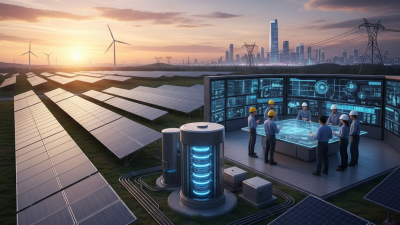
Battery suppliers concentrate on lithium-based storage systems, battery management software, thermal control, and modular container design. Buyers should examine cycle-life data, fire-safety testing, warranty conditions, and local service capacity. Numbers need context. A claimed service life may depend on temperature, charging speed, and daily operating depth.
Strong suppliers usually provide traceable production records, independent testing reports, and installation guidance. They understand grid codes and documentation requirements in different markets. However, communication can still be uneven, especially during technical changes. That weakness deserves attention. Buyers should request sample reports, factory audits, spare-parts plans, and realistic delivery schedules before signing contracts.
| Renewable Energy Segment | Core Technologies | Common Exported Products | Typical Technical Data | Main Applications | Key Buyer Evaluation Criteria |
|---|---|---|---|---|---|
| Solar Photovoltaic Modules | Monocrystalline silicon cells, passivated contact cells, bifacial technology, half-cut cell design, multi-busbar interconnection | Utility-scale modules, rooftop modules, bifacial modules, lightweight modules | Commercial module efficiencies commonly exceed 20%; bifacial designs can generate additional rear-side energy depending on ground reflectivity and installation conditions | Utility-scale solar farms, commercial rooftops, residential systems, floating solar | Power output, temperature coefficient, degradation rate, mechanical-load rating, fire classification, warranty terms, IEC certification |
| Solar Inverters | Maximum power-point tracking, grid synchronization, reactive-power control, power-factor regulation, hybrid energy management | String inverters, central inverters, hybrid inverters, microinverters | Modern grid-connected inverters commonly achieve peak efficiencies above 98%; capacities range from residential kilowatts to utility-scale megawatts | PV plants, distributed generation, microgrids, solar-plus-storage systems | Efficiency curve, maximum DC voltage, grid-code compliance, anti-islanding protection, cybersecurity, cooling method, service network |
| Battery Energy Storage Systems | Lithium iron phosphate cells, battery-management systems, liquid cooling, containerized integration, energy-management software | Residential storage units, commercial cabinets, utility-scale battery containers, DC-coupled storage systems | Lithium iron phosphate systems are widely selected for stationary storage because of thermal stability; cycle life commonly depends on depth of discharge, temperature and operating strategy | Peak shaving, renewable-energy shifting, frequency regulation, backup power, microgrids | Cell traceability, thermal-runaway protection, fire suppression, usable energy, round-trip efficiency, degradation model, local safety approvals |
| Wind Power Equipment | Variable-speed generators, permanent-magnet direct drive, doubly fed induction generators, pitch control, condition monitoring | Onshore turbines, offshore turbines, blades, nacelles, towers, converters and control systems | Onshore turbine ratings commonly range from approximately 2 MW to 7 MW; offshore machines are generally larger and may exceed 15 MW in newer projects | Onshore wind farms, offshore wind farms, hybrid wind-solar projects | Annual energy production, power curve, wind-class suitability, blade transport requirements, corrosion protection, availability guarantee, spare parts |
| Small and Medium Hydropower | Francis, Kaplan and Pelton turbine designs, hydraulic governors, synchronous generators, automated control systems | Turbine-generator sets, control panels, excitation systems, intake equipment and refurbishment packages | Francis turbines suit medium head and flow conditions; Kaplan turbines suit lower head with variable flow; Pelton turbines suit high-head applications | Run-of-river projects, irrigation systems, rural electrification, industrial captive power | Hydrological data, rated head and flow, efficiency at partial load, sediment resistance, civil-work interface, environmental permitting |
| Biomass and Biogas Systems | Anaerobic digestion, biomass combustion, gas cleaning, combined heat and power, feedstock pre-treatment | Biogas digesters, biomass boilers, gas engines, generators, digestate-treatment equipment | Biogas output and methane concentration vary substantially with feedstock, retention time, temperature and digester design; CHP systems can provide both electricity and useful heat | Agricultural waste treatment, landfill-gas recovery, food-processing plants, district heating | Feedstock analysis, gas yield, hydrogen sulfide removal, emissions compliance, digestate management, continuous-operation capability |
| Green Hydrogen Equipment | Alkaline electrolysis, proton-exchange-membrane electrolysis, rectifiers, gas purification, compression and water treatment | Electrolyzer stacks, complete hydrogen-production systems, power supplies, drying units and balance-of-plant equipment | Alkaline systems are widely used for large-scale production; proton-exchange-membrane systems generally offer faster response to variable renewable power | Industrial hydrogen, ammonia production, refinery applications, seasonal renewable-energy storage | Specific energy consumption, hydrogen purity, dynamic response, stack lifetime, water quality requirements, pressure rating, safety certification |
| Charging and Microgrid Infrastructure | AC and DC power conversion, load management, distributed energy control, vehicle-to-grid readiness, remote monitoring | AC chargers, DC fast chargers, integrated solar-storage-charging systems, microgrid controllers | DC charging power commonly ranges from tens of kilowatts to several hundred kilowatts, depending on vehicle, connector and grid capacity | Commercial fleets, public charging, industrial parks, renewable-powered charging stations | Connector compatibility, charging protocol, grid connection, uptime, payment platform integration, cybersecurity and after-sales support |
Technical values are indicative market ranges or technology characteristics. Final specifications depend on project conditions, applicable standards, configuration and contractual testing requirements.
Evaluating Chinese renewable energy suppliers requires more than comparing quoted prices. Begin with project experience in your target climate, grid environment, and system size. Ask for completed project records, commissioning dates, operating data, and client references. A supplier with ten years of production may still lack experience with your country’s permitting rules. That distinction matters.
Request factory audit access before signing a major contract. Inspect production lines, material traceability, calibration records, and quality-control checkpoints. Review independent test reports and certifications relevant to your project and destination market. Check whether drawings, manuals, and safety documents are available in accurate English. Weak documentation often creates costly delays during installation.
Test the supplier’s technical discipline through detailed questions. Can its engineers explain degradation assumptions, temperature performance, spare-parts planning, and grid-code compliance? Require a clear inspection and testing plan, including factory acceptance tests and shipment checks. Examine warranty terms, response times, exclusions, and the supplier’s financial ability to honor them. Speak with recent overseas customers, not only selected references. Visit an operating site if possible.
A polished factory tour can mislead. I have seen impressive samples hide inconsistent batch controls. Independent inspections reduce that risk. Keep payment milestones linked to verified production and test results. Confirm export experience, packaging methods, insurance responsibilities, and dispute procedures under a suitable contract. Local technical support is valuable, but availability should be written, not assumed. Even careful evaluation has blind spots. Document every concern and challenge optimistic promises with measurable evidence.
China’s renewable energy suppliers serve a fast-growing market. IRENA’s Renewable Capacity Statistics 2024 reports 473 GW of renewable capacity added globally in 2023. Buyers should verify export documentation before comparing prices. For solar modules, request IEC 61215 and IEC 61730 test evidence. For inverters, IEC 62109 and IEC 62116 records are relevant. Battery shipments may require IEC 62619 testing and UN 38.3 transport documentation. These certificates must match the exact model, factory, and production revision.
Certification alone is not enough. A serious supplier should provide serial-number traceability, material declarations, warranty terms, and recent factory audit reports. ISO 9001 supports process control, while ISO 14001 indicates a structured environmental management system. Requirements also change by destination. CE documentation may support European market access, but it does not replace country-specific grid approval. Small details matter. Check the test date.
Supply-chain resilience deserves equal attention. The IEA reported that China held over 80% of global solar PV manufacturing capacity across major production stages in 2022. This concentration can reduce costs, but it may increase exposure to shipping delays, policy changes, and upstream shortages. Ask for dual-source plans, port options, production lead times, and confirmed Incoterms. Request photos of pallet labels and container seals before dispatch. That step feels basic, yet it can expose mismatched documentation. Supplier claims should be checked against independent inspection results, customs records, and performance data from comparable installations. Mistakes still happen. A low quotation can hide weak after-sales support or unclear responsibility for damaged cargo.
Selecting a Chinese renewable energy partner requires more than comparing factory prices. China added about 297.6 GW of renewable capacity in 2023, according to IRENA’s Renewable Capacity Statistics 2024. The scale is impressive, but scale alone does not prove reliability. IEA’s Renewables 2024 report expects China to provide nearly 60% of global renewable capacity additions through 2030. Buyers should examine whether a supplier’s production systems match international project demands.
Ask for recent project references, audited quality records, and verified production capacity. A serious supplier should explain cell, module, inverter, battery, or component testing in clear language. Check certification validity, local grid-code compliance, warranty terms, and spare-parts support before signing. Factory visits can reveal practical details: clean storage areas, labeled pallets, calibrated testing equipment, and workers who understand traceability. Documents matter. Physical evidence matters more.
Pricing needs careful interpretation. A low quotation may hide weaker degradation guarantees, uncertain delivery schedules, or costly replacement procedures. Request serial-number tracking and independent inspection before shipment. Also review transport insurance, customs documentation, and dispute clauses under applicable law. Some buyers focus heavily on efficiency ratings and overlook communication after installation. That mistake can become expensive. My own preference is a smaller trial order before full deployment, although this slows procurement and may not suit every project. No supplier is perfect. The better question is whether its weaknesses are visible, measurable, and manageable.