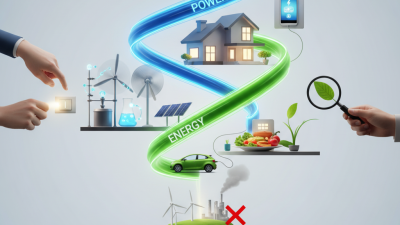

What powers a city after sunset, when solar panels stop producing electricity? The answer begins with a deeper question: what is the source of the energy? Energy does not appear from nowhere. It changes form, moving from sunlight, chemical bonds, moving water, heat, or nuclear reactions into useful electricity and motion.
A coal plant releases energy stored in ancient biological matter. A wind turbine captures moving air, which began with uneven heating from the Sun. Hydropower depends on rain, gravity, and landscapes shaped over time. In each case, engineers trace the original input, measure efficiency, and examine environmental costs. This approach matters because a convenient energy source may carry hidden emissions, land demands, or waste.
Look closely.
At a kitchen light, electrons travel through wires after generators convert mechanical energy. In a battery, chemical reactions create a controlled flow of charge. These examples show why “source” and “carrier” should not be confused. Electricity is usually an energy carrier, not the original source.
Reliable explanations must also admit uncertainty. Energy systems vary by region, technology, weather, and human choices. A textbook diagram can simplify these relationships too much. By comparing scientific evidence, operating data, and local conditions, this article explores how energy begins, changes, and reaches everyday life. The goal is not to praise one technology blindly. It is to understand the chain from origin to use, including its limits and unanswered questions.
What Is the Source of Energy?
Defining Energy and Its Role in Nature
Energy is the capacity to cause change, from warming a stone to moving an electric train. Nature stores it in several forms. Sunlight drives photosynthesis, gravity moves water, and chemical bonds power metabolism. Heat also flows through soil, oceans, and the atmosphere.
In practical energy analysis, sources are often grouped as primary and secondary. Coal, sunlight, wind, and uranium are primary sources. Electricity and hydrogen are energy carriers, not original sources. This distinction matters when comparing efficiency. A power plant may deliver electricity reliably, yet lose energy as heat during conversion.
The Energy Institute’s Statistical Review of World Energy 2024 reported that fossil fuels supplied about 81.5% of global primary energy in 2023. The same review recorded strong growth in solar and wind generation. The International Renewable Energy Agency reported 473 gigawatts of renewable capacity additions during 2023. These figures reveal progress, but also dependence.
Energy is never simply “used up.” It changes form.
A battery turns chemical energy into electrical energy. Some energy becomes unwanted heat. That loss is not useless in every setting, but it limits performance. The International Energy Agency estimated global energy-related carbon dioxide emissions reached a record level in 2023, exceeding 37 billion tonnes. The number is precise, yet the systems behind it remain uneven across regions. A colder home, a longer supply chain, or an inefficient motor can quietly increase demand. My earlier assumption was that cleaner sources alone would solve the problem. Efficiency, storage, transmission, and daily behavior deserve equal scrutiny.
What Is the Source of Energy?
Tracing the Primary Sources of Energy
Energy begins with physical processes that move matter, create heat, or store chemical potential. Most usable energy on Earth traces back to the Sun. Plants capture sunlight through photosynthesis and store it in chemical bonds. Animals and people access that energy through food. Ancient plants and organisms also contributed to coal, oil, and natural gas over geological time.
Not every source is solar. Earth’s interior supplies geothermal heat, which can warm water and generate electricity. The Moon helps drive tides through gravitational forces. Nuclear energy comes from changes inside atomic nuclei, not sunlight. In field studies, measuring temperature, pressure, radiation, and flow helps scientists identify energy sources accurately. Energy maps are useful, but they can simplify local conditions. A windy ridge may produce less power after seasonal changes. That detail deserves attention.
Tips: Trace energy backward before judging its impact. Ask what process created it, how it is converted, and what is lost as heat. Check measurements from reliable scientific institutions. Compare seasonal data, not one impressive reading. Try a small household experiment. Place dark and light surfaces under sunlight, then measure their temperatures. Results may vary, and that is useful. Mistakes can reveal hidden influences, such as shade, wind, or an inaccurate thermometer.
Fossil fuels supplied the largest share of global primary energy in 2023, with oil, coal, and natural gas together accounting for most energy use. Hydropower, nuclear energy, and other renewables also contributed to the global energy system.
Data shown in approximate exajoules (EJ), based on global energy statistics for 2023.
What Is the Source of Energy?
Explaining How Energy Is Converted and Transferred
Energy does not appear from nowhere. It changes form and moves between systems. Sunlight becomes chemical energy in plants through photosynthesis. Burning fuel converts chemical energy into heat, then motion, electricity, and waste heat. In a battery, chemical reactions push electrons through a circuit. The useful output is always smaller than the input because some energy spreads into the surroundings.
The International Energy Agency reported that global energy demand grew by about 2.2% in 2023. Electricity demand increased even faster in several developing regions. This growth shows why conversion efficiency matters. A power station may generate electricity, but its cooling towers release large amounts of heat. Transmission lines also lose energy as current travels over distance. We often notice the lamp, not the invisible losses.
The IPCC’s Sixth Assessment Report identifies energy supply as responsible for roughly 34% of global greenhouse-gas emissions in 2019. Renewable systems reduce fuel combustion, yet they still require materials, land, storage, and transmission. A solar panel does not create energy; it transfers sunlight into electricity. That distinction is easy to miss. My own view has changed here: cleaner energy is not automatically consequence-free energy. Better analysis must measure the entire chain, from extraction and conversion to final use. Small losses multiply. Sometimes, efficiency improvements deserve more attention than impressive generation figures.
| Energy Source or Form | Where the Energy Comes From | Main Conversion | How Energy Is Transferred | Real-World Example | Key Scientific Principle |
|---|---|---|---|---|---|
| Radiant Energy | Electromagnetic waves, including visible light and infrared radiation | Radiant energy → chemical energy or thermal energy | Radiation through empty space or transparent materials | Plants use light in photosynthesis to store energy in glucose | Energy can travel without matter moving from one place to another |
| Chemical Energy | Chemical bonds in food, fuels, and batteries | Chemical energy → thermal, electrical, or mechanical energy | Heat, moving matter, or electric current | Cellular respiration releases energy from food for biological work | Chemical reactions rearrange atoms while conserving total energy |
| Gravitational Potential Energy | An object's position in a gravitational field | Gravitational potential energy → kinetic energy | Mechanical work as an object moves downward | Water descending through a dam turns a turbine | Near Earth's surface, gravitational energy is approximately E = mgh |
| Kinetic Energy | The motion of an object or particles | Kinetic energy → mechanical work, sound, or thermal energy | Collisions, forces, vibrations, and moving fluids | Wind transfers motion to rotating turbine blades | For a moving object, kinetic energy is approximately E = ½mv² |
| Thermal Energy | Random microscopic motion of particles | Thermal energy → mechanical or electrical energy | Conduction, convection, and radiation | Heated water produces steam that expands and drives a turbine | Heat naturally flows from a higher temperature to a lower temperature |
| Electrical Energy | The movement or arrangement of electric charges | Electrical energy → light, heat, sound, or motion | Electric current through conductors and electrical components | An electric motor converts electrical energy into rotation | Electrical power is measured in watts; P = VI for direct current |
| Nuclear Energy | Energy stored in atomic nuclei | Nuclear energy → thermal energy → mechanical or electrical energy | Heat transfer, fluid motion, and electromagnetic induction | Nuclear fission releases heat that can produce steam | A small change in mass corresponds to large energy according to E = mc² |
| Elastic Potential Energy | Deformation of materials such as springs, rubber, or bows | Elastic energy → kinetic energy or sound | Forces released as the material returns toward its original shape | A compressed spring launches an object | Energy storage depends on the material and amount of deformation |
Comparing Renewable and Nonrenewable Energy Sources
Every light, train, and data center depends on an energy source. Renewable energy comes from sunlight, wind, moving water, and organic matter. These resources replenish naturally, although equipment and weather still limit their reliability. Nonrenewable energy includes coal, oil, natural gas, and uranium. Their supplies are finite. Some also release carbon dioxide or create long-term waste.
The scale of change is measurable. The International Energy Agency reported that global renewable power capacity grew by about 510 gigawatts in 2023. Solar power provided most of that increase. Strong progress. Yet the Energy Institute’s Statistical Review of World Energy 2024 found that fossil fuels still supplied roughly 80% of global energy consumption in 2023. This gap shows why replacing existing systems remains difficult.
Renewables can reduce emissions during operation, but they need grids, storage, minerals, and careful land planning.
Nonrenewable fuels provide dense, controllable energy, which helps factories and transport operate continuously. However, their pollution costs often appear outside the electricity bill. That comparison is not perfectly fair.
I have seen solar panels produce less power during cloudy afternoons, while gas turbines respond quickly when demand rises. This practical detail matters. Clean energy is not automatically simple energy. The IRENA Renewable Capacity Statistics 2024 report also recorded strong renewable expansion, but installation numbers alone cannot prove affordability or reliability. More honest analysis should examine the full system, including construction, maintenance, transmission, and disposal.
Energy sources do more than power machines. They make daily survival possible. Sunlight grows crops through photosynthesis. Electricity cools vaccines, pumps clean water, and lights clinics after sunset. Different energy systems also support cooking, heating, transport, and communication. In practical energy assessments, reliability matters as much as total supply. A bright solar panel is useless when storage cannot cover a night shift.
People need dependable energy. According to Tracking SDG 7: The Energy Progress Report 2024, about 685 million people lacked electricity in 2022. Roughly 2.1 billion people still lacked access to clean cooking. These figures reveal a health and development problem, not only an infrastructure gap.
The World Health Organization reported that household air pollution caused approximately 3.2 million premature deaths in 2020. Smoke inside a small kitchen can become an invisible daily hazard.
The International Energy Agency’s Electricity 2024 report projected global electricity demand would grow by about 4% annually through 2026. That growth reflects cooling, digital services, industry, and improved access. Yet forecasts can miss local realities. A national supply may look strong while a rural clinic faces outages. Better planning should combine renewable generation, efficient networks, storage, and backup capacity. It should also measure affordability, because power that households cannot pay for remains practically unavailable.