Skip to content

Top Li Ion Battery Components for Global Buyers

For global buyers, selecting Li Ion Battery Components is not simply a price comparison. It is a decision about safety, consistency, traceability, and long-term performance. A cell may look impressive on paper, yet fail after repeated charging, temperature changes, or rough transportation.

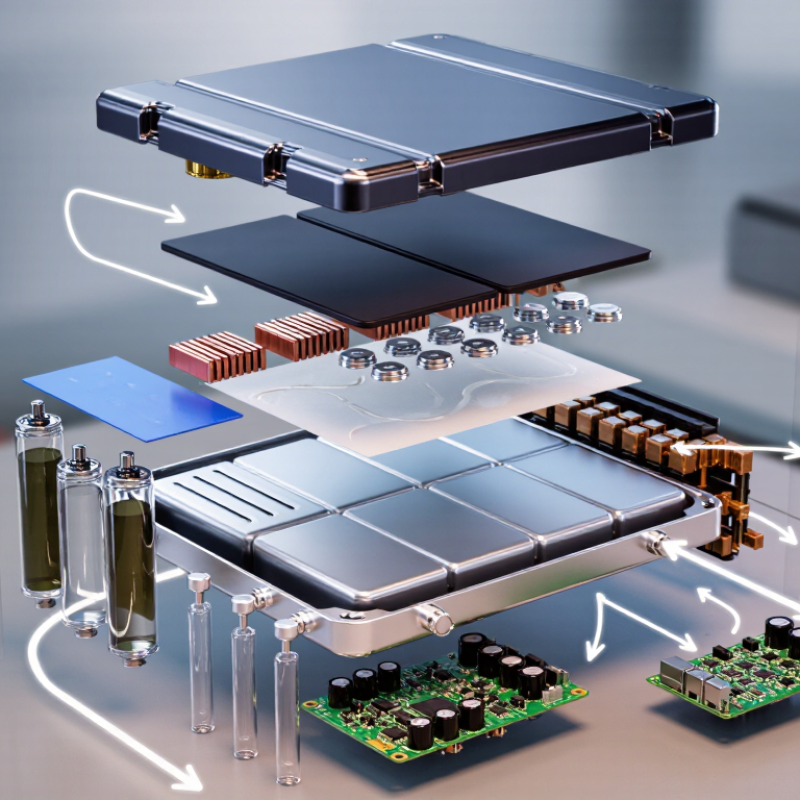
The main components deserve separate attention. Cathode chemistry influences energy density and material cost. Anode materials affect charging speed and cycle life. Separators must resist heat and prevent internal contact. Electrolytes support ion movement, but their quality influences stability. Current collectors, casings, tabs, and battery management systems also shape the finished pack. Small details matter.

Stanley Whittingham, a Nobel Prize-winning battery researcher, once said, “The lithium-ion battery has changed the world.” His statement reflects the technology’s broad impact, but it should not encourage careless purchasing. Every supplier claim needs evidence. Buyers should request test data, batch records, safety documentation, and clear manufacturing specifications. Independent inspections can reveal differences between samples and mass production.

Compliance matters too. Relevant transport, electrical, and environmental requirements should be checked for each destination market. Certification alone is not enough. It must match the actual product.

Some buyers still focus too heavily on capacity. That is understandable, but incomplete. A higher capacity rating may bring shorter service life, greater thermal demands, or more difficult quality control. Experienced procurement teams compare the complete system, not one attractive number. This guide examines the most important Li Ion Battery Components, their practical functions, sourcing risks, and evaluation methods for dependable global purchasing.

Top Li Ion Battery Components for Global Buyers

Battery Cell Anatomy: Cathode, Anode, Separator, Electrolyte, and Current Collectors

Top Li Ion Battery Components for Global Buyers

A lithium-ion cell is a carefully layered electrochemical system. The cathode stores lithium within its active material and strongly influences voltage, energy density, and thermal behavior. The anode receives lithium ions during charging, commonly using carbon-based materials. Its pore structure affects charging speed and cycle performance. Small changes matter.

The separator is a thin, porous film between the electrodes. It prevents direct contact while allowing ions to pass through. A damaged separator can cause an internal short circuit. The electrolyte carries lithium ions between the cathode and anode. Its composition affects conductivity, low-temperature operation, and safety. It is not a simple liquid filler.

Current collectors provide an electronic path to the external circuit. Aluminum usually supports the cathode, while copper commonly supports the anode. Their thickness, surface treatment, and bonding quality influence resistance and durability. From practical procurement experience, buyers should compare electrode loading, moisture limits, impedance, and test conditions. Datasheet numbers can look precise, yet testing methods often differ. I have seen promising cells underperform after temperature cycling. That gap deserves scrutiny. Suppliers should provide traceable test records, dimensional tolerances, and samples for independent verification. A balanced cell design rarely maximizes every feature; higher energy density may reduce charging tolerance or thermal margin. Trade-offs remain.

Cathode Chemistry: NMC, LFP, and Energy Density Above 250 Wh/kg

Cathode chemistry strongly shapes lithium-ion battery performance, cost, safety, and service life. For global buyers, NMC remains attractive when compact size and high energy density matter. Nickel-rich NMC cells can exceed 250 Wh/kg at the cell level under optimized designs. That figure is not guaranteed. It depends on electrode loading, charging limits, temperature, and production consistency.

LFP uses more abundant materials and offers strong thermal stability, long cycle life, and predictable performance. Its energy density is usually lower than NMC, often below 250 Wh/kg at cell level. However, the chemistry can deliver better usable value when safety margins and daily cycling matter. A lighter pack is not always the better pack. Weight, cooling hardware, enclosure design, and operating conditions can change the real result.

Experienced buyers should request third-party test data, not only laboratory claims. Check whether the quoted number describes a cell, module, or complete pack. Ask for cycle-life results at realistic temperatures and charging rates. I have seen impressive energy-density figures lose relevance after adding protection systems and structural parts. That gap deserves attention. Specifications should also include capacity tolerance, aging behavior, transport documentation, and traceability for each production batch.

Anode Materials: Graphite, Silicon Blends, and Capacity Near 372 mAh/g

For global buyers, anode selection starts with a basic figure: graphite offers about 372 mAh/g theoretical capacity. This value is useful for comparison. It is not a guaranteed cell result. Natural and synthetic graphite behave differently during mixing, coating, and cycling. Particle shape matters. So does surface treatment. A loose powder can raise processing costs and reduce consistency.

Silicon blends attract attention because silicon stores far more lithium than graphite. Yet expansion remains their central engineering problem. During charging, silicon can swell dramatically. Repeated swelling may damage the electrode structure and weaken cycle life. Small additions often improve energy density without creating extreme mechanical stress. Larger additions demand stronger binders, tighter formation control, and careful electrolyte selection. The trade-off is real. More capacity can mean more risk.

When reviewing suppliers, buyers should request complete test conditions. Ask for active-material content, electrode loading, first-cycle efficiency, density, and cycle retention. A quoted 372 mAh/g may describe active powder, not a complete anode. Check half-cell and full-cell data separately. Temperature also changes results. Room-temperature data alone is incomplete. I would also inspect lot variation and moisture limits. These details feel minor, but they often decide production stability. One uncomfortable point remains: silicon blends are not automatically better. They may be unsuitable for designs with limited expansion space or strict cost targets. A balanced specification is usually more useful than a headline capacity.

Safety Components: Separators, BMS, and Thermal Control Above 60°C

For global buyers, lithium-ion battery safety depends on components working together, especially above 60°C. A separator keeps positive and negative electrodes apart. Some designs use shutdown layers that reduce ion movement during overheating. However, this response is not a complete safety system. A damaged separator may fail before pore closure becomes effective. Buyers should review puncture strength, shrinkage data, thickness consistency, and heat-aging results.

The battery management system, or BMS, monitors cell voltage, current, and temperature. At 60°C or higher, sensor accuracy becomes critical. A reliable BMS should limit charging, reduce discharge power, and disconnect the pack when conditions become unsafe. Multiple temperature sensors help detect hot spots near terminals and tightly packed cells. Cell balancing also matters, because one overcharged cell can create extra heat. In practical sourcing reviews, unclear sensor placement is a recurring weakness. It deserves direct questions.

Thermal control should remove heat, not merely hide it. Air channels, heat spreaders, insulation, and liquid cooling paths must match the pack design. Uneven contact can leave a small area dangerously hot. Buyers should request thermal maps from realistic load tests, including high ambient temperatures and blocked airflow. Test records, calibration details, and traceable production checks strengthen supplier credibility. Some specifications look impressive on paper but lack field evidence. That gap needs careful reflection.

Global Purchasing Standards: Quality, Traceability, and 1,000+ Cycle Life

Top Li Ion Battery Components for Global Buyers

Global battery purchasing now demands evidence, not attractive specification sheets. The International Energy Agency reported that global electric vehicle battery demand reached about 750 GWh in 2023. That scale increases pressure on cells, separators, electrolytes, busbars, and battery management systems. Each component should carry a traceable lot number, production date, test record, and material declaration.

Quality needs defined conditions. A claim of 1,000+ cycles means little without discharge depth, temperature, charging rate, and end-of-life capacity. IEC 62619 provides safety requirements for industrial lithium secondary cells and batteries. Buyers should request test results linked to the exact production batch. Sample testing is useful. It is not enough.

Procurement teams should also examine incoming inspection methods, calibration records, and corrective-action history. BloombergNEF reported lithium-ion battery pack prices at 139 US dollars per kWh in 2023, showing why cost pressure remains intense. Still, cheaper components may create higher replacement and warranty exposure. I have seen purchasing reviews focus heavily on energy density while overlooking connector resistance and thermal uniformity. That is an avoidable gap. A practical audit can compare five production lots, inspect cell matching, and verify data retention for several years. Traceability must survive shipment, assembly, and field service. Small details matter.

Top Li Ion Battery Components for Global Buyers - Global Purchasing Standards: Quality, Traceability, and 1,000+ Cycle Life

Component Primary Function Common Materials or Chemistry Key Purchasing Specifications Quality-Control Requirements Traceability Records Typical Service or Cycle-Life Target Relevant Standards and Tests
Cathode Active Material Stores and releases lithium ions during charge and discharge. Lithium iron phosphate (LFP), nickel-manganese-cobalt oxide (NMC), or lithium nickel manganese oxide (LNMO). Particle-size distribution: controlled by application
Moisture: low ppm-level specification
Metal impurity control: required for copper, iron, sodium, and other contaminants
Incoming chemical analysis, moisture testing, tap-density measurement, particle-size analysis, and electrochemical sample-cell validation. Raw-material lot, synthesis batch, test report, production date, storage conditions, and shipment lot. When matched with a suitable cell design and operating profile, LFP systems are commonly selected for applications targeting more than 1,000 cycles. IEC 62660-1 UN 38.3 ISO 9001
Anode Active Material Accepts lithium ions during charging and releases them during discharge. Natural graphite, synthetic graphite, silicon-graphite composite, or lithium titanate for specialized designs. Reversible capacity: chemistry-dependent
Particle morphology: consistent and application-specific
Surface area and moisture: controlled to reduce side reactions
Particle-size distribution, specific-surface-area testing, moisture analysis, impurity screening, and half-cell or full-cell performance checks. Graphite source lot, coating or treatment batch, laboratory results, warehouse humidity record, and final release approval. Graphite-based anodes can support more than 1,000 cycles when paired with compatible cathode chemistry, electrolyte, formation process, and thermal controls. IEC 62660-1 ISO 9001 ISO 14001
Separator Film Prevents direct contact between the electrodes while allowing ionic conduction. Microporous polyethylene (PE), polypropylene (PP), PP/PE/PP multilayer film, or ceramic-coated polyolefin. Thickness: commonly about 10–30 µm
Porosity: typically application-controlled
Mechanical strength: sufficient for winding or stacking
Shutdown behavior: required for selected designs
Thickness uniformity, porosity, air permeability, puncture strength, tensile strength, shrinkage, and visual-defect inspection. Film-roll number, resin lot, coating batch, slitting records, inspection results, and storage-condition history. Cycle life depends on separator chemistry, electrolyte compatibility, cell pressure, temperature, and abuse resistance; no universal cycle value applies to the separator alone. IEC 62660-3 UL 2580 ISO 9001
Electrolyte Provides ionic transport between the cathode and anode. Lithium salt, commonly LiPF6, dissolved in carbonate-based solvents with selected additives. Water content: controlled at low ppm levels
Conductivity: formulation-specific
Flash point and viscosity: matched to cell design
Additive package: selected for cycle and storage stability
Water analysis, density, viscosity, conductivity, acidity, ionic impurity, visual clarity, and container-integrity checks. Salt lot, solvent lot, additive batch, mixing record, filling date, container seal, and cold-chain or storage record when applicable. Proper formulation and moisture control are essential for achieving a cell-level target of 1,000+ cycles; electrolyte performance is application-dependent. IEC 62660-1 UN 38.3 SDS
Current Collectors Conduct electrical current between the active materials and external terminals. Aluminum foil for the cathode and copper foil for the anode. Thickness: commonly about 6–20 µm
Width and edge quality: matched to electrode design
Surface cleanliness: free from oil, burrs, and metallic particles
Thickness mapping, tensile strength, elongation, surface roughness, pinhole inspection, burr measurement, and winding compatibility. Metal coil number, rolling batch, foil-slitting record, surface-treatment batch, inspection report, and shipment lot. Collectors do not have an independent cycle-life rating; their resistance, adhesion, corrosion resistance, and dimensional stability influence cell life. IEC 62660-1 IATF 16949 ISO 9001
Electrode Coating Applies the cathode or anode active mixture uniformly onto the current collector. Active material, conductive additive, binder, and solvent system selected for the electrode chemistry. Coating loading: controlled by energy and power requirements
Thickness uniformity: tightly controlled across the web
Adhesion: sufficient to resist cracking and delamination
Wet and dry coating-weight checks, thickness mapping, adhesion testing, porosity measurement, edge inspection, and residual-solvent control. Mixing batch, coating line, operator or shift record, slurry viscosity, drying profile, roll number, and nonconformance history. Uniform coating and stable calendaring are major contributors to consistent capacity retention and cell-level performance beyond 1,000 cycles. IEC 62660-1 IATF 16949 ISO 9001
Cell Housing and Cover Encloses the electrochemical stack and protects it from mechanical, environmental, and electrical hazards. Aluminum alloy pouch, cylindrical steel, or prismatic aluminum housing, depending on cell format. Dimensional tolerance: matched to module design
Sealing performance: leak-tight after assembly
Pressure-relief design: appropriate for cell format
Corrosion resistance: verified for the intended environment
Dimensional inspection, weld or seal-strength testing, helium or pressure-leak testing, insulation resistance, and pressure-relief verification. Metal or film lot, forming batch, welding parameters, sealing record, leak-test result, and final inspection data. Housing life is evaluated as part of the complete cell; mechanical integrity and sealing must remain stable throughout the intended cycle and calendar life. IEC 62619 UL 2580 UN 38.3
Terminals, Tabs, and Insulation Transfers current from the electrode stack and prevents unintended electrical contact. Nickel-plated steel, aluminum, copper, nickel, polymer insulation films, and electrical tapes. Electrical resistance: low and consistent
Weldability: compatible with assembly process
Insulation rating: suitable for maximum system voltage and temperature
Weld-pull testing, contact-resistance measurement, insulation-resistance testing, dimensional inspection, and contamination checks. Terminal material lot, plating batch, welding program, pull-test record, insulation material lot, and inspection release. Stable connections help prevent localized heating and resistance growth, supporting the complete cell’s intended cycle-life target. IEC 62619 UL 2580 IEC 62133-2
Battery Management System (BMS) Monitors voltage, current, and temperature while managing protection, balancing, estimation, and communication. Voltage and temperature sensors, protection switches, control processor, balancing circuit, communication interface, and firmware. Voltage accuracy: application-specific
Temperature monitoring: multiple sensing points as required
Protection functions: overcharge, over-discharge, overcurrent, short circuit, and over-temperature
Communication: CAN, UART, or other defined protocol
Functional testing, protection-threshold verification, sensor calibration, firmware validation, communication testing, and fault-injection testing. PCB lot, component date codes, firmware version, calibration record, programming record, test fixture ID, and serial-number association. A correctly configured BMS is essential to protect cells and help maintain a system target of 1,000+ cycles; the BMS does not create cycle life independently. IEC 62619 UL 1973 ISO 26262
Thermal Management Materials Controls heat transfer and limits temperature differences between cells during operation. Thermal interface pads, gap fillers, graphite sheets, cooling plates, phase-change materials, or liquid-cooling components. Thermal conductivity: selected for the heat-load profile
Compression set: compatible with module assembly
Electrical insulation: required where specified
Operating temperature: matched to the battery environment
Thermal-conductivity testing, thickness and compression checks, adhesion inspection, dielectric testing where applicable, and aging evaluation. Material lot, formulation or cure batch, thickness record, supplier test report, installation location, and assembly torque or compression data. Keeping cells within a controlled temperature range helps reduce capacity loss and resistance growth, supporting long-life designs above 1,000 cycles. IEC 62619 UL 1973 ISO 16750
Module and Pack Enclosure Provides mechanical protection, environmental sealing, mounting interfaces, and system-level safety. Aluminum, coated steel, engineering polymers, gaskets, fasteners, and flame-retardant materials. Ingress protection: defined by application, such as IP-rated designs
Structural strength: verified under vibration and shock
Flammability: suitable for the system risk assessment
Service access: compatible with maintenance requirements
Dimensional inspection, torque verification, ingress testing, vibration and shock testing, grounding continuity, insulation testing, and thermal-event assessment. Enclosure material lot, gasket lot, fastener batch, torque record, assembly line, serial-number mapping, and final inspection report. The enclosure supports system durability but has no standalone cycle-life rating; complete-pack life depends on cell chemistry, controls, temperature, and load profile. IEC 62619 UL 1973 UN 38.3

Purchasing note: Cycle-life figures are system-level targets rather than universal component ratings. Actual results depend on cell chemistry, depth of discharge, charge and discharge rate, operating temperature, storage conditions, balancing strategy, and safety limits. Buyers should request lot-specific certificates of analysis, inspection records, safety-test reports, and serial-number traceability before approval.