
As industries worldwide shift towards sustainability, sourcing clean energy solutions has become essential. According to the International Energy Agency (IEA), renewable energy sources accounted for nearly 30% of global electricity generation in 2021. This trend highlights the growing perception of clean energy as a viable alternative to fossil fuels. Yet, challenges remain in global procurement. Companies must navigate complex supply chains to ensure they choose reliable sources.
Investing in clean energy not only mitigates environmental impact but also offers economic benefits. A report from the World Economic Forum indicates that transitioning to renewable energy can create 24 million new jobs by 2030. However, these benefits require careful planning and execution. Many organizations face difficulties in understanding market dynamics and supplier capabilities. Without diligent research, companies may risk investing in less effective solutions.
The journey toward adopting clean energy is not without reflection. Organizations must assess their energy needs, potential challenges, and alignment with sustainability goals. Embracing a clean energy future is crucial, but it demands mindful adaptation and strategic sourcing.

Identifying clean energy sources is crucial for sustainable global procurement. Businesses today face the challenge of sourcing energy that aligns with environmental goals. Solar, wind, and hydroelectric power are common solutions. Each has unique benefits and limitations. For instance, solar energy is abundant but requires significant space. Wind energy is efficient but can be location-dependent.
When assessing clean energy, it's vital to consider local availability. Some regions may have more wind or sunshine, affecting the feasibility of projects. Companies often struggle with the integration of these sources into existing systems. The transition can seem daunting. Consulting experts in renewable technology can provide valuable insights. These professionals can guide procurement strategies tailored to specific locations and industries.
While clean energy solutions are promising, they also present challenges. Initial costs may be high, and infrastructure can be lacking in certain areas. Organizations must evaluate long-term savings against upfront investments. Collaboration with local communities can enhance acceptance and implementation. Sustainable solutions require thoughtful planning and commitment. Balancing immediate needs and future goals is essential for effective energy procurement strategies.
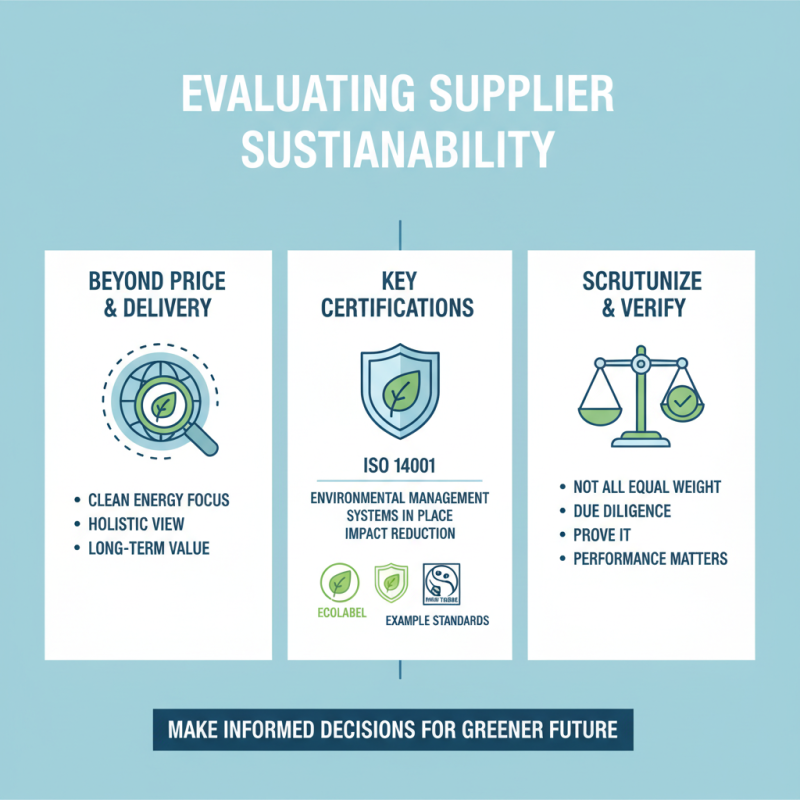
When sourcing clean energy solutions, evaluating supplier sustainability practices is crucial. Companies should look beyond just price and delivery times. Certifications like ISO 14001 can indicate a supplier's commitment to environmental management. These certifications showcase that a supplier has systems in place to monitor and reduce environmental impact. However, it's essential to recognize that not all certifications carry the same weight.
Reviewing a supplier’s sustainability reports helps in understanding their actual practices. These documents often reveal both their achievements and shortcomings. It’s common for reports to overemphasize successes while glossing over challenges. Engaging in discussions with suppliers about their goals fosters transparency. Questions should address how they plan to improve their sustainability performance over time.
Not every supplier may meet high sustainability standards. Some may claim commitment without substantial evidence. It’s vital to consider third-party audits for a more objective view. Look for red flags such as vague commitments or lack of clear metrics. A comprehensive evaluation of both practices and certifications leads to better partners in clean energy procurement. Balancing expectations with reality ensures more informed decisions.
Developing a comprehensive clean energy procurement strategy requires careful planning. According to the International Energy Agency, global renewable energy capacity is set to increase by 50% by 2025. This shift opens opportunities for businesses looking to source clean energy solutions globally.
Understanding local regulations is essential. Different regions have varying incentives and requirements for clean energy procurement. For example, countries in the European Union have robust frameworks promoting renewable energy use. However, some regions lack clarity in policies, complicating decision-making.
Organizations should incorporate sustainability targets into their procurement objectives. This aligns their operations with global climate goals. Many companies face challenges in measuring the sustainability of their suppliers. The Carbon Disclosure Project highlights that 70% of companies lack the necessary data to track their emissions effectively. Developing a procurement strategy that includes rigorous assessments of potential suppliers can help close this gap.
| Energy Source | Cost ($/MWh) | Carbon Reduction (kg CO2/kWh) | Implementation Time (Months) | Availability (%) |
|---|---|---|---|---|
| Solar Energy | 30 | 0.0005 | 6 | 80 |
| Wind Energy | 40 | 0.0012 | 12 | 60 |
| Hydropower | 35 | 0.0003 | 18 | 75 |
| Geothermal Energy | 50 | 0.0008 | 24 | 70 |
| Biomass | 45 | 0.0040 | 20 | 65 |
In today’s world, sourcing clean energy solutions is crucial for global procurement. Technology and innovation are key to achieving this goal. Companies are leveraging digital tools to streamline their sourcing processes. These technologies enhance transparency and improve supplier engagement.
To harness technology effectively, consider these tips. Use data analytics to identify potential suppliers. This can lead to better decision-making. Track performance metrics to determine the effectiveness of clean energy solutions. Data can reveal which options are not performing as expected.
Innovation should not be overlooked. Collaboration with startups often brings fresh perspectives. Stay open to new ideas and alternative solutions. Regularly reassess your energy sources for areas of improvement. Remember that the journey to sustainability is ongoing. It's essential to adapt and evolve with the industry trends.
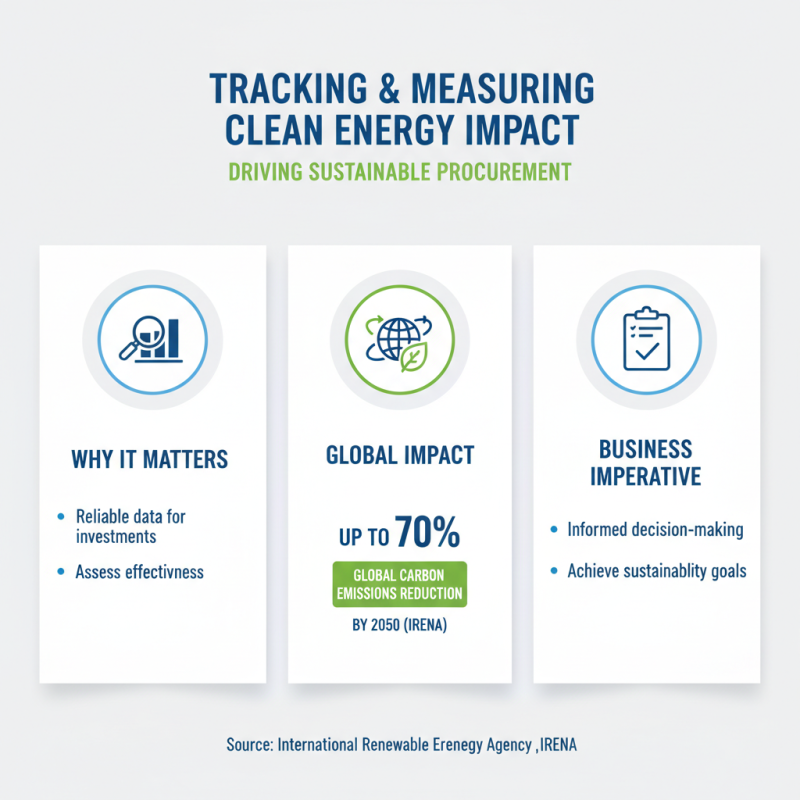
Tracking and measuring the impact of clean energy solutions is vital in today’s procurement landscape. Companies need reliable data to assess their investments. According to the International Renewable Energy Agency, transitioning to clean energy can reduce global carbon emissions by up to 70% by 2050. This statistic highlights the importance of not just adopting clean energy but also evaluating its effectiveness.
Quantifying the impact often involves setting benchmarks. For example, a recent report from the World Resources Institute indicated that businesses using renewable energy saw a 13% decrease in operational costs on average. However, collecting precise measurement data can be challenging. Many companies face difficulty in attributing specific savings or emissions reductions directly to clean energy solutions. Gaps in measurement tools can lead to overestimations or, conversely, underreporting of benefits.
Organizations must refine their approaches. Collaboration with third-party auditors can enhance credibility. Transparency in reporting is crucial, yet many firms still use vague metrics. Their impact assessments gradually fall short due to poor data collection practices. This inconsistency presents an opportunity for improvement in tracking clean energy solutions effectively.