

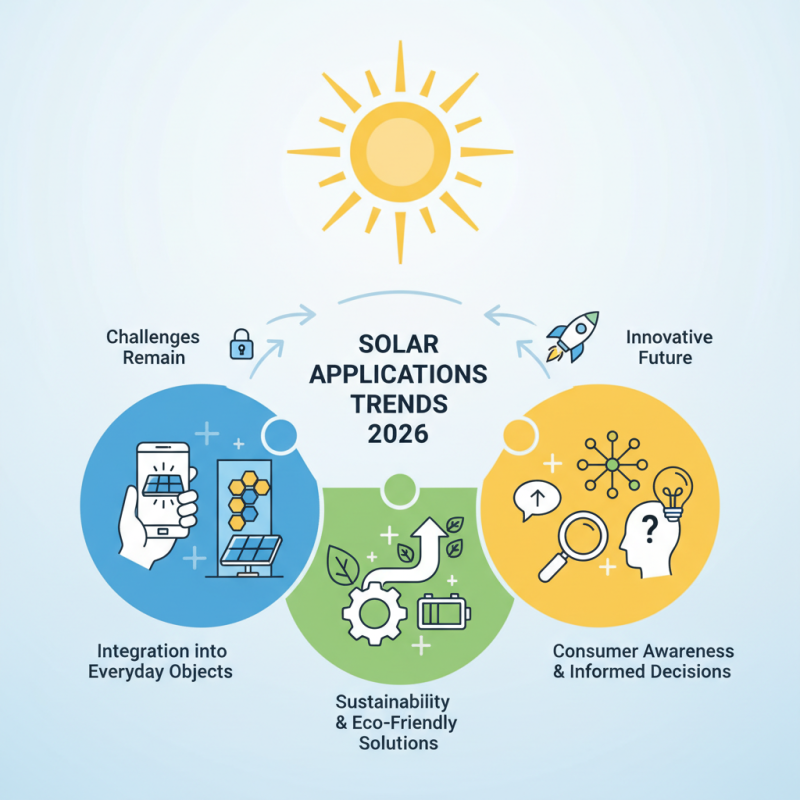
In recent years, the landscape of Solar Applications has undergone significant transformation. Industry expert Dr. Emily Chen emphasizes, “The future of solar lies in innovative applications that enhance energy efficiency.” As we approach 2026, several trends are emerging that could reshape how we harness solar energy.
One notable trend is the integration of solar technology into everyday objects. From solar-powered wearables to solar panels embedded in building materials, creativity is driving new possibilities. This shift not only increases accessibility but also highlights the need for practical solutions. Despite these advancements, challenges remain. Many consumers still lack awareness about solar technology's potential benefits.
Moreover, the focus on sustainability is propelling growth in Solar Applications. Companies are investing in research and development to create eco-friendly solutions. Still, there are gaps in implementing these technologies on a broader scale. Potential users must understand their options fully to make informed decisions. The path ahead is filled with opportunities and obstacles, pushing the solar industry toward a more innovative future.
Emerging solar technologies are revolutionizing the energy landscape. In 2026, advancements will streamline energy efficiency and accessibility. Innovative solar panels will utilize new materials. These materials will increase energy conversion rates significantly. More households will embrace solar power due to cost reductions and improved efficiency.
Tips for home installation: Consider the orientation of your roof. A south-facing roof maximizes sun exposure. Also, think about your energy consumption trends. This understanding helps in choosing the right system size.
Next-gen solar batteries will support consistent energy supply. These batteries will store excess energy for nighttime use. As energy independence becomes more desirable, these technologies will gain traction. Integration of smart systems will optimize energy usage. They allow real-time monitoring and adjustments based on consumption patterns.
Tips for smart integration: Research local incentives for smart technologies. These can reduce installation costs. Ensure compatibility with existing home systems. A well-planned integration leads to better performance and savings. Embracing these trends may not be easy. Yet, the payoff in energy savings and sustainability is significant.
| Application | Technology Type | Projected Growth (%) | Key Benefits |
|---|---|---|---|
| Residential Solar Installations | Photovoltaic Systems | 20% | Lower energy bills, increased home value |
| Utility-Scale Solar Farms | Concentrated Solar Power | 15% | Large energy production, economies of scale |
| Solar-Powered Electric Vehicles | Integrated Solar Panels | 30% | Reduced fossil fuel dependency, lower emissions |
| BIPV (Building Integrated Photovoltaics) | Transparent Solar Cells | 25% | Dual function of building materials & energy generation |
| Solar Water Heating | Thermal Solar Collectors | 18% | Efficient heating, reduced energy consumption |
The advancements in solar energy storage solutions are changing the landscape of renewable energy. A significant trend in 2026 focuses on integrating smart battery systems. These systems optimize energy use by storing excess solar power for later use. Such innovations enhance efficiency and make solar energy more reliable. They can respond to energy demands dynamically, providing power when it is most needed.
In addition, we are witnessing the rise of solid-state batteries. Unlike traditional lithium-ion batteries, solid-state models promise increased safety and longer lifespans. This shift could drastically reduce the environmental impact of battery production and disposal. However, challenges remain. The manufacturing process is complex and costly, and scaling up production might take time.
Another interesting development is the use of artificial intelligence in energy management. AI systems are capable of analyzing energy consumption patterns, making predictions, and optimizing storage. Such technology can help homeowners and businesses reduce energy costs. Yet, the reliance on data raises privacy concerns. Balancing efficiency with security will be crucial as we move forward in this solar revolution.
The global solar market is evolving rapidly. By 2026, the adoption of solar applications is expected to soar, driven by several key trends. According to the International Energy Agency (IEA), global solar capacity could reach 3,500 gigawatts by 2026, a substantial increase from 1,600 gigawatts in 2021. This growth reflects a collective shift towards renewable energy in response to climate change and energy security concerns.
Energy storage technologies are becoming vital in this transition. The demand for efficient energy storage solutions is rising, with BloombergNEF predicting the battery storage market will grow at a compound annual growth rate (CAGR) of 25%. Solar power, combined with advanced storage, is increasingly seen as a reliable energy source. Many households and businesses are considering solar-plus-storage options. However, challenges remain with high up-front costs and varying state regulations.
Innovations in photovoltaic technology are also noteworthy. New materials and designs are enhancing efficiency levels. Some flexible solar panels offer portable solutions for homes and businesses. Despite these advancements, the solar industry still faces obstacles. Issues like supply chain disruptions and regulatory hurdles must be addressed. The path to mainstream solar adoption is promising yet imperfect, calling for continued innovation and strategic planning.
Government policies play a vital role in shaping the solar energy landscape. By 2026, various incentives will drive solar adoption. Tax credits and rebates can significantly lower installation costs for homeowners. Such financial support encourages more individuals to consider solar panels.
Local governments may also implement programs to streamline the permitting process. Reducing red tape can accelerate solar installations in residential and commercial settings. However, not all policies are effective or equitable. Some regions may lack adequate incentives, limiting access to solar technology for lower-income households.
The role of federal funding and research grants should not be overlooked. Investing in solar technology research can lead to innovations in efficiency and storage. Yet, there's a risk of reliance on fluctuating government support. Continuous advocacy is needed to maintain momentum for solar initiatives, ensuring they remain accessible and effective. Climate change demands urgent action, and community engagement is crucial for promoting sustainable solutions.
Solar energy is becoming vital for global sustainability. According to the International Renewable Energy Agency (IRENA), solar power could account for 24% of global electricity generation by 2030. This shift supports climate goals and reduces dependency on fossil fuels. More communities are investing in solar infrastructure. This effort creates jobs and stimulates local economies.
However, challenges remain in solar adoption. Not all regions have equal access to technology. Latency in regulatory approval can delay solar project implementation. As we move toward 2026, the integration of solar in urban planners’ strategies is essential. Cities must incorporate solar into building designs to maximize energy efficiency. The Carbon Trust estimates that urban solar installations could save over 1.5 billion tons of CO2 emissions annually.
Educating consumers on solar benefits is equally important. Awareness can drive demand and acceptance. Studies show that informed communities are more likely to adopt sustainable practices. Solar initiatives can enhance energy security, but they require collaboration. Governments, businesses, and residents must share responsibilities. Addressing inequalities in access and knowledge will be crucial for long-term progress.
This chart illustrates the projected growth trends of various solar applications by 2026, highlighting their contributions toward achieving global sustainability goals. The data reflects the anticipated adoption rates and market demands for different solar technologies.