
Skip to content

How to Identify Different Sources of Energy for Your Needs?

Identifying the right sources of energy is crucial for both individuals and businesses. The latest report from the International Energy Agency states that renewable sources now account for 29% of the global electricity generation in 2022. This shift underscores a growing reliance on sustainable energy options. However, not all energy sources are created equal. As energy expert Dr. Emily Roberts noted, “Assessing your actual energy needs is vital for making informed choices.”

Understanding your unique requirements is essential. Factors such as location, energy demand, and budget play significant roles. For example, solar panels are advantageous in sunny areas but may not be as effective in regions with extensive cloud cover. In contrast, wind energy thrives in coastal regions where wind patterns are favorable. It’s essential to weigh these considerations carefully.

Moreover, the transition to alternative sources of energy isn't always straightforward. Some may underestimate the costs of installation or maintenance. Depending on energy supply chains can also introduce risks. A thoughtful assessment of the various sources of energy is necessary to ensure sustainable, cost-effective decisions that truly meet your needs.
How to Identify Different Sources of Energy for Your Needs?

Types of Energy Sources: An Overview of Renewable and Non-Renewable Forms
How to Identify Different Sources of Energy for Your Needs?

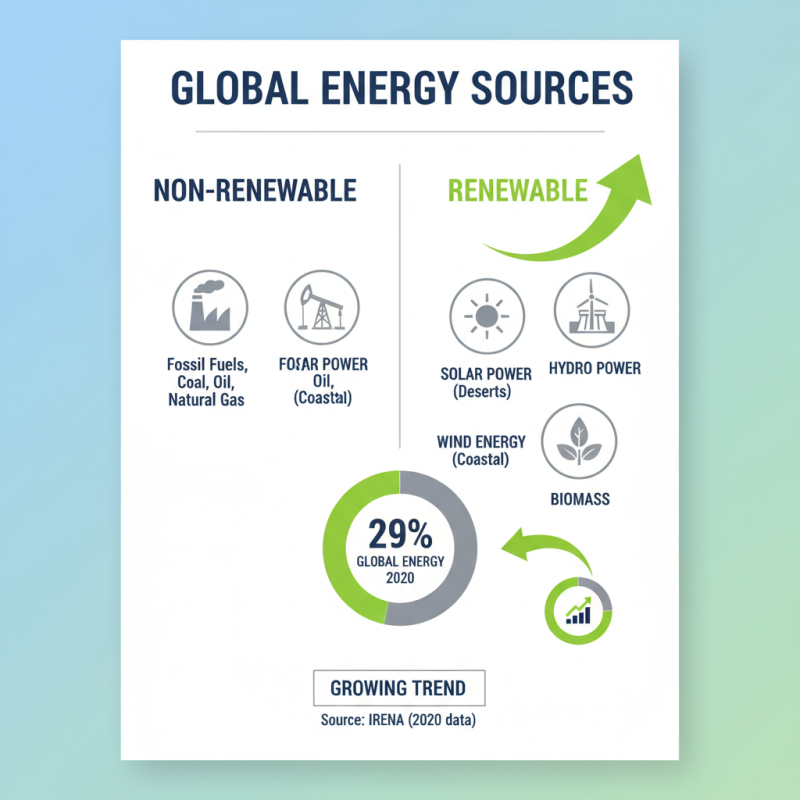
Energy sources can be classified into two main categories: renewable and non-renewable. Renewable energy includes solar, wind, hydro, and biomass. According to the International Renewable Energy Agency (IRENA), renewables accounted for nearly 29% of global energy consumption in 2020. This number is growing. Regions rich in sunlight, like deserts, can fully benefit from solar power. Similarly, coastal areas can harness wind energy. The latest studies show this trend is set to continue.

Non-renewable sources, like coal, oil, and natural gas, remain significant. The U.S. Energy Information Administration (EIA) reported that in 2021, about 79% of the world’s energy still came from these sources. Transitioning away from fossil fuels poses challenges. Infrastructure must adapt. Cities that rely on coal face tough decisions. There is an ongoing debate about the balance between energy affordability and sustainability.

Understanding energy sources is critical for informed decision-making. Each type has distinct advantages and disadvantages. Decisions affect not only costs but also the environment. Investment in renewables is increasing, yet some regions struggle with energy transition. Creating a sustainable energy future demands innovation and collective action. It requires examining local resources and assessing long-term impacts.

Evaluating Your Energy Needs: Assessing Usage Patterns and Requirements

Evaluating your energy needs is crucial. Start by assessing your usage patterns. Track your energy consumption daily for a week. Note the times of peak usage. This helps identify when you need the most energy.

Tips: Use a simple notebook or an app. Record every appliance's usage. Don’t forget to include heating and cooling systems. This data will clarify your highest energy demands.

Next, consider your specific requirements. What tasks consume the most power? Kitchen appliances? Lighting? Understanding these habits can guide your energy source choices. Transitioning to energy-efficient devices can lower your needs.

Tips: Set aside time each month to review your usage. Ask yourself if each device is essential. Make adjustments based on your findings. These small changes can lead to significant savings over time.

How to Identify Different Sources of Energy for Your Needs?

Energy Source Usage Pattern Requirements Environmental Impact Cost Estimate (per kWh)
Solar Energy High during daylight Solar panels installation Low emissions $0.05 - $0.15
Wind Energy Variable, site-dependent Wind turbine setup Minimal emissions $0.01 - $0.05
Natural Gas Steady, high demand Infrastructure connection Moderate emissions $0.03 - $0.07
Hydropower Consistent, year-round Dams and water access Low emissions $0.02 - $0.08
Geothermal Energy Consistent, site-dependent Drilling and connection Low emissions $0.05 - $0.10

Comparative Analysis: Efficiency and Cost of Different Energy Sources

When considering energy sources, efficiency and cost are critical factors. Solar energy, for instance, can be very efficient in sunny regions. Homeowners often see savings on electricity bills over time. However, installation costs may be high upfront. For others, this can be a point of hesitation.

Wind energy presents another option. It’s renewable and usually has low operating costs. Yet, the initial investment for wind turbines can be significant. Some areas may not receive enough consistent wind, making it less reliable. This raises questions about location and feasibility.

Natural gas is often touted for its cost-effectiveness. It can be cheaper than solar or wind in many regions. However, its environmental impacts can't be ignored. Dependence on fossil fuels presents long-term risks. Each energy source has its pros and cons, and personal priorities will guide choices. Balancing costs with environmental considerations remains a tricky endeavor for many.

Environmental Impact: Energy Source Selection Based on Sustainability Metrics

Selecting energy sources requires careful consideration of their environmental impacts. Sustainable metrics provide a framework for making informed choices. These metrics include carbon emissions, resource depletion, and ecological footprint. For example, solar energy is often praised for its low emissions, but the production of solar panels can be resource-intensive.

Wind energy is another sustainable option. It generates electricity without burning fossil fuels. However, it can disrupt local wildlife. Birds may collide with turbines, which raises ecological concerns. These trade-offs need assessment when evaluating wind energy's benefits versus its drawbacks.

Geothermal energy may seem attractive due to its low emissions and reliability. Yet, not all regions can access it easily. Some areas face high costs for installation. Thus, geographical and economic factors must be part of the decision-making process. Assessing sustainability metrics involves balancing immediate benefits with long-term consequences.

Environmental Impact of Different Energy Sources

This bar chart illustrates the CO2 emissions associated with various energy sources per kilowatt-hour (kWh). Solar and wind energy show negligible emissions, highlighting their sustainability, while coal has the highest emissions, emphasizing the environmental impacts of fossil fuels.

Future Trends: Innovations in Energy Production and Consumption Alternatives

The energy landscape is shifting rapidly. Innovations in energy production and consumption are emerging, showcasing flexibility and sustainability. Reports indicate that renewable energy sources, like solar and wind, could meet up to 80% of global energy demands by 2050. This statistic highlights the urgency for a transition away from fossil fuels.

Energy storage technologies, such as advanced batteries, are pivotal in this evolution. They allow for efficient energy use and help to balance supply and demand. The Energy Information Administration (EIA) predicts that energy storage capacity could increase by eight times by 2030. This development may improve grid stability and reliability, creating a more resilient energy ecosystem.

Tip: Consider integrating renewable sources into your energy mix, even in small ways. Start with solar panels or even community wind projects. These alternatives offer a tangible way to contribute to a sustainable future.

A challenge remains: not all innovations are scalable or viable for every region. Some communities struggle with high initial investment costs, while others lack access to advanced technology. It’s essential to examine these disparities and prioritize equitable solutions. Exploring energy options locally might uncover hidden potential, but reflection on community needs is crucial.