

How to Choose Wind Farm Energy Solutions for Global Buyers?
Choosing wind farm energy solutions for global buyers is rarely a simple equipment decision. It is a long-term investment involving wind conditions, grid access, financing, maintenance, and local workforce capacity. A turbine that performs well on a windy European ridge may struggle in a humid coastal market or a remote desert location.
Francesco La Camera, Director-General of the International Renewable Energy Agency, has stated, “Renewables are now the cheapest source of new power in most parts of the world.” His view highlights the economic potential of wind power, but price alone cannot guide a responsible purchase. Buyers must examine the complete project lifecycle. That includes turbine efficiency, foundation design, energy storage, digital monitoring, spare-parts availability, and end-of-life planning.
Details matter. A salty breeze can accelerate corrosion. Weak roads can delay blade transport. Dust can reduce performance and increase cleaning costs. Grid instability may also limit the value of generated electricity. These risks are easy to underestimate during early negotiations.
Experience teaches caution.
The strongest solution is not always the largest turbine or the lowest quotation. It should match local resources, technical standards, environmental expectations, and the buyer’s operational goals. Independent testing, transparent performance data, and qualified engineering partners can reduce uncertainty. Still, no forecast is perfect. Wind patterns change, supply chains fail, and maintenance assumptions may prove too optimistic. Global buyers should leave room for revision, rather than treating a business model as permanent. This guide explores the practical criteria behind safer, more resilient wind farm energy decisions.
Global Wind Capacity Exceeded 1,000 GW in 2023: Define Buyer Requirements
Global wind capacity passed 1,000 GW in 2023, but the headline hides different buyer realities. The Global Wind Energy Council reported 1,021 GW worldwide in its Global Wind Report 2024. IRENA recorded about 1,017 GW in Renewable Capacity Statistics 2024. The small difference reflects methodology, not market weakness. That number matters.
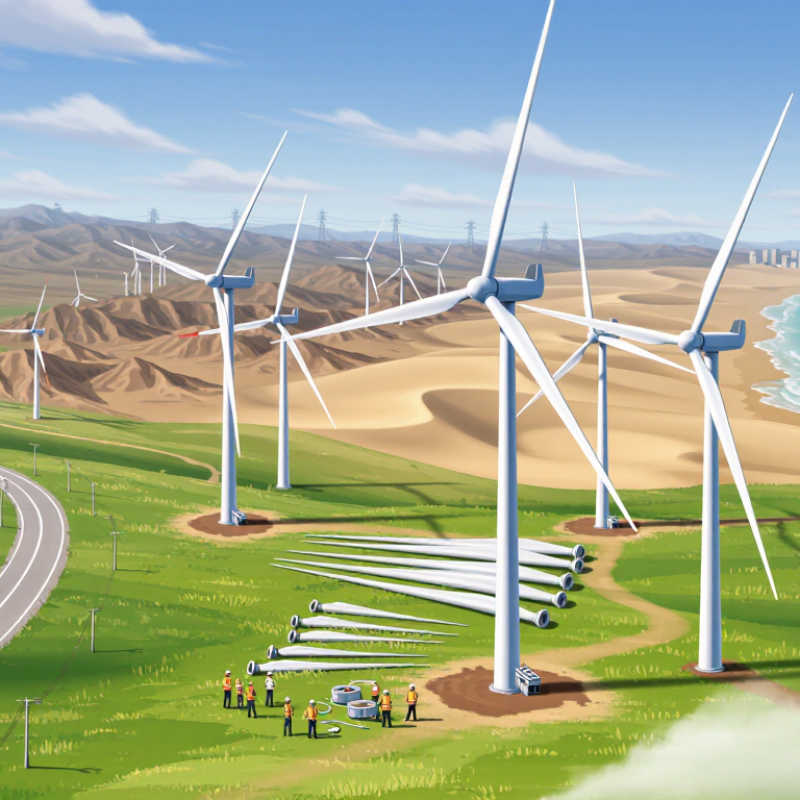
Global buyers should define requirements before comparing wind solutions. Start with evidence. Specify the target capacity, wind conditions, turbine class, grid code, and expected availability. A coastal project may face salt corrosion, while an inland site may require taller towers and stronger logistics planning. For a 100 MW project, buyers should request production estimates using local wind measurements, not regional averages. They should also test low-wind and curtailment scenarios.
Commercial terms need equal attention. Compare levelized cost, warranty scope, spare-parts access, commissioning support, and training requirements. The International Energy Agency’s Renewables 2023 report expects wind and solar to drive most renewable growth through 2028. This supports long-term demand, but it does not remove project risks. Grid delays, transport limits, financing costs, and unclear maintenance duties can damage returns. A cheaper offer may become expensive after installation. Procurement teams sometimes overvalue rated capacity and undervalue service response time. That is a common blind spot. Require transparent assumptions, independent technical review, and measurable performance guarantees before selecting an energy solution.
| Requirement Category | Decision Metric | Relevant Global Data | What Buyers Should Define | Reference Basis |
|---|---|---|---|---|
| Market Scale | Global installed wind capacity | Approximately 1,017 GW at the end of 2023 | Confirm whether the project is intended for a mature, established wind market or an emerging market with greater infrastructure and permitting uncertainty. | Renewable Capacity Statistics 2024 |
| Annual Growth | New wind capacity added in 2023 | Approximately 117 GW globally | Use a delivery schedule that accounts for strong global demand, manufacturing lead times, transport capacity and construction-resource availability. | Global Wind Report 2024 |
| Technology Type | Onshore and offshore deployment | Onshore wind represented roughly 93% of global capacity; offshore represented roughly 7% in 2023 | Select onshore solutions for land-based sites and simpler logistics, or offshore solutions where stronger wind resources justify higher marine construction and grid costs. | Renewable Capacity Statistics 2024 |
| Site Resource | Mean annual wind speed at hub height | Must be established through site-specific measurement; commercial projects commonly assess approximately 6–10 m/s depending on site type | Require a bankable wind assessment using met masts, remote sensing, long-term correction and uncertainty analysis before final equipment selection. | IEC wind-resource assessment practices |
| Turbine Sizing | Rated power and rotor configuration | Modern utility-scale turbines commonly range from about 3 MW to more than 6 MW onshore, while offshore units commonly exceed 8 MW | Define target rated power, rotor diameter, hub height, transport limits and suitability for low-, medium- or high-wind conditions. | Utility-scale wind technology ranges reported in 2023–2024 market reviews |
| Energy Yield | Net capacity factor | Often approximately 25–45% onshore and 40–60% offshore, depending on resource, losses and availability | Compare suppliers using a guaranteed net annual energy production model rather than rated power alone. Include wake, electrical, icing, curtailment and availability losses. | International wind-project performance benchmarks |
| Grid Connection | Voltage, frequency and grid-code compliance | Requirements vary by country and grid operator; utility projects commonly connect at medium- or high-voltage collection and transmission levels | Specify reactive-power capability, fault ride-through, active-power control, voltage control, frequency response and harmonic-performance limits. | IEC 61400 series and national grid codes |
| Reliability | Availability and service response | A project availability target of 97% or higher is commonly used for utility-scale planning, subject to contract terms and exclusions | Define guaranteed availability, corrective-maintenance response time, spare-parts strategy, remote monitoring and planned-maintenance windows. | Common utility-scale wind O&M contract benchmarks |
| Climate Suitability | Temperature, icing, corrosion and extreme wind | IEC turbine classes address different wind conditions; site-specific temperature, turbulence, icing and corrosion risks must be evaluated | Select the correct turbine class and environmental package for tropical, cold, desert, high-altitude, coastal or typhoon-prone locations. | IEC 61400-1 wind turbine design requirements |
| Land and Logistics | Transport route, crane access and site footprint | Blade length, tower-section dimensions, road limits and crane capacity can determine practical turbine size | Complete route surveys and geotechnical studies before procurement. Confirm bridge loads, turning radii, port access, laydown areas and foundation conditions. | Standard wind-farm construction and transport planning requirements |
| Energy Storage | Battery capacity and duration | Storage is project-specific; a 1-hour system provides short-duration support, while 2–4 hours is commonly assessed for shifting and grid services | Define whether storage is required for ramp-rate control, congestion management, frequency response, backup power or energy-price optimization. | Utility-scale battery-storage planning practice |
| Commercial Model | Levelized cost of electricity and revenue structure | Wind project economics depend on wind yield, financing, construction cost, grid charges, curtailment and power-market prices | Request a full-life-cycle cost model covering capital expenditure, operating expenditure, replacement components, insurance, decommissioning and expected net generation. | Renewable power-generation cost assessment methodology |
| Sustainability | Lifecycle emissions and end-of-life planning | Wind power has low lifecycle greenhouse-gas emissions compared with fossil-fuel generation; material recovery plans vary by component | Include lifecycle carbon reporting, recyclable-material targets, waste handling, blade-management plans and restoration obligations in the tender documents. | Lifecycle assessment literature for wind power |
| Procurement Verification | Testing, certification and warranty coverage | Type certification, component testing, factory acceptance testing and site acceptance testing are standard risk-control measures | Require independent verification of power curves, noise, loads, grid performance, cybersecurity controls, documentation and warranty exclusions. | IEC 61400 series and project-finance due-diligence practice |
| Buyer Checklist Define the wind resource, target annual energy production, grid requirements, climate conditions, logistics constraints, storage needs, lifecycle cost, service obligations and certification requirements before comparing quotations. | ||||
Related Posts
-
Top 10 Benefits of Wind Power Energy You Should Know?
-
2026 Best Wind Energy Solutions for Global Buyers?
-

2026 Top Wind Power Energy Trends You Should Know?
-
China Best Wind Energy Suppliers for Global Buyers?
-
Why Is Wind Power Energy Considered a Key Solution for Renewable Energy Needs?
-
Why is Wind Energy the Future of Sustainable Power?