

Skip to content

How to Choose the Best Lithium Battery Car for You?

Choosing the right Lithium Battery Car is vital in today's eco-conscious world. These vehicles offer efficiency and sustainability. With various options on the market, finding the perfect fit can be challenging.

Consider your driving habits. Do you travel long distances regularly? If so, a model with a larger battery and longer range may be necessary. Electric vehicle charging stations are becoming common, but availability varies by region. This can impact your choice significantly.

Budget is another crucial factor. Lithium Battery Cars come in various price ranges. Often, higher prices mean better features and longer warranties. Reflect on your needs and finances. A car is a significant investment, and mistakes can be costly. Taking the time to evaluate your priorities will ensure the best outcome for your purchase.
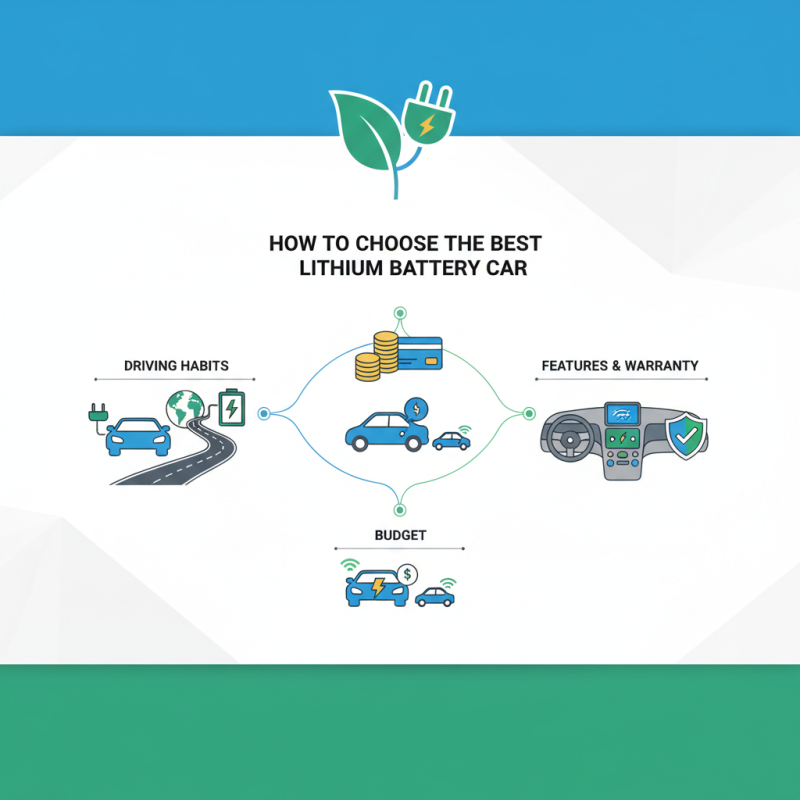
How to Choose the Best Lithium Battery Car for You?

Key Considerations for Selecting a Lithium Battery Car

When choosing a lithium battery car, several key considerations come into play. Battery capacity is crucial. Larger capacity means longer range. Reports suggest that most electric vehicles (EVs) average around 300 miles per charge. However, many drivers may find this varying range a challenge, especially in colder climates.

Charging infrastructure can't be overlooked. The U.S. has about 100,000 public charging stations, yet access remains uneven. Urban areas may have many options, while rural zones can lack sufficient charging points. This discrepancy often leads to range anxiety for potential owners.

Cost is another factor. The average price of a lithium battery car stood at around $56,000 in 2023. While incentives exist, upfront costs remain a hurdle. Many consumers may debate whether the investment is worth it, especially as technology evolves rapidly. Buyers must weigh these factors carefully to ensure they make an informed choice.

Understanding Lithium Battery Technology and its Impact on Performance

Lithium battery technology powers modern electric vehicles. It’s crucial to understand its impact on vehicle performance. Lithium batteries are popular for their energy density. They can store more energy in a compact size. This allows for longer drives on a single charge. However, battery life can diminish over time.

Charging speed is another essential aspect. Lithium batteries can charge quickly, but this can affect longevity. Rapid charging may cause heat buildup, which can shorten battery life. Drivers should be mindful of their charging habits. A balance between convenience and maintenance is key.

Performance isn’t just about speed. Acceleration, weight, and range are vital. Heavier batteries can affect maneuverability. Some users may overlook this. Exploring various battery options is necessary to find the best fit. Each choice comes with trade-offs. Reflecting on personal driving needs is important. Determine what aspects matter most to enjoy the ride.

How to Choose the Best Lithium Battery Car for You?

Car Model Battery Capacity (kWh) Range (miles) Charge Time (hrs) Power (hp) Efficiency (mi/kWh)
Model A 75 300 8 250 4.0
Model B 100 350 10 300 3.5
Model C 85 280 9 270 3.3
Model D 60 240 7 220 4.0

Comparing Range and Charging Time Among Leading Lithium Battery Cars

When choosing a lithium battery car, two key factors stand out: range and charging time. The average range of leading electric vehicles is around 250 to 350 miles per charge. According to a recent industry report, some top models can indeed reach over 400 miles. However, this greater range does not always suit every driver’s needs.

Charging time is another critical aspect. Level 2 chargers can typically power up a car in 4 to 8 hours. Fast chargers reduce this time dramatically to about 30 minutes for an 80% charge. Yet, the reality is that charging infrastructure varies widely. In many areas, fast chargers are scarce. This inconsistency could lead to frustrating breaks during longer journeys.

While these specifications are important, they don’t tell the whole story. Real-world range can differ based on driving conditions and habits. Cold weather significantly affects battery performance. Drivers should consider how often they travel long distances. What may work perfectly for one person could be less practical for another. Understanding these nuances is vital before making a decision.

Evaluating Cost, Maintenance, and Lifespan of Lithium Battery Vehicles

When evaluating lithium battery vehicles, cost, maintenance, and lifespan are crucial factors. On average, a lithium battery can cost between $5,000 to $15,000 depending on capacity. This initial investment might seem high, but consider the long-term savings on fuel and reduced maintenance costs. Many lithium vehicles require fewer service visits than traditional gas cars. A report by the Electric Vehicle Association notes that maintenance costs can drop by up to 30% for electric vehicles.

Battery lifespan is another significant topic. Most lithium batteries last between 8 to 15 years, with manufacturers stating a range of 100,000 to 200,000 miles of usage. However, factors like charging habits and climate can impact longevity. In hotter climates, battery performance may degrade faster, leading to shorter overall life. Many users report unexpected decreases in battery capacity over time, which is a key concern.

It's essential to consider battery degradation when planning for future costs. Although replacement strategies exist, expenses can accumulate swiftly. Additionally, some drivers find themselves needing to replace batteries sooner than anticipated due to inefficient charging practices. Reflecting on your usage and habits can lead to informed decisions and potentially greater satisfaction with your vehicle choice.

Comparison of Key Factors in Lithium Battery Vehicles

Analyzing Environmental Impact and Sustainability of Lithium Batteries

As the world shifts towards electric vehicles, lithium batteries play a crucial role in this transition. However, the environmental impact of lithium extraction is significant. Mining for lithium often involves pumping brine from beneath salt flats, which depletes local water sources. This practice can harm ecosystems and communities dependent on water. We must reflect on the trade-offs of choosing lithium battery cars.

Sustainability is not just about emission reduction. It's essential to consider the entire life cycle of lithium batteries. The production process consumes energy and resources. Recycling facilities for lithium batteries are still developing, leading to potential waste issues. Current recycling methods can recover only a fraction of the lithium from spent batteries. Future innovations will be necessary to enhance efficiency in recycling.

Moreover, the reliance on lithium can raise concerns about resource scarcity. Global demand is skyrocketing, and this could lead to over-extraction. Manufacturers must find sustainable practices. They should prioritize transparency and responsible sourcing. Consumers need to consider these factors when choosing their vehicles. Making informed choices will drive demand for environmentally friendly alternatives and better practices in the industry.